Understanding Vibroacoustic Therapy
Vibroacoustic therapy (VAT) is an evidence-based intervention that uses low-frequency sound vibrations to promote relaxation and support various therapeutic outcomes. But what makes this approach so effective?
The Science Behind the Sound
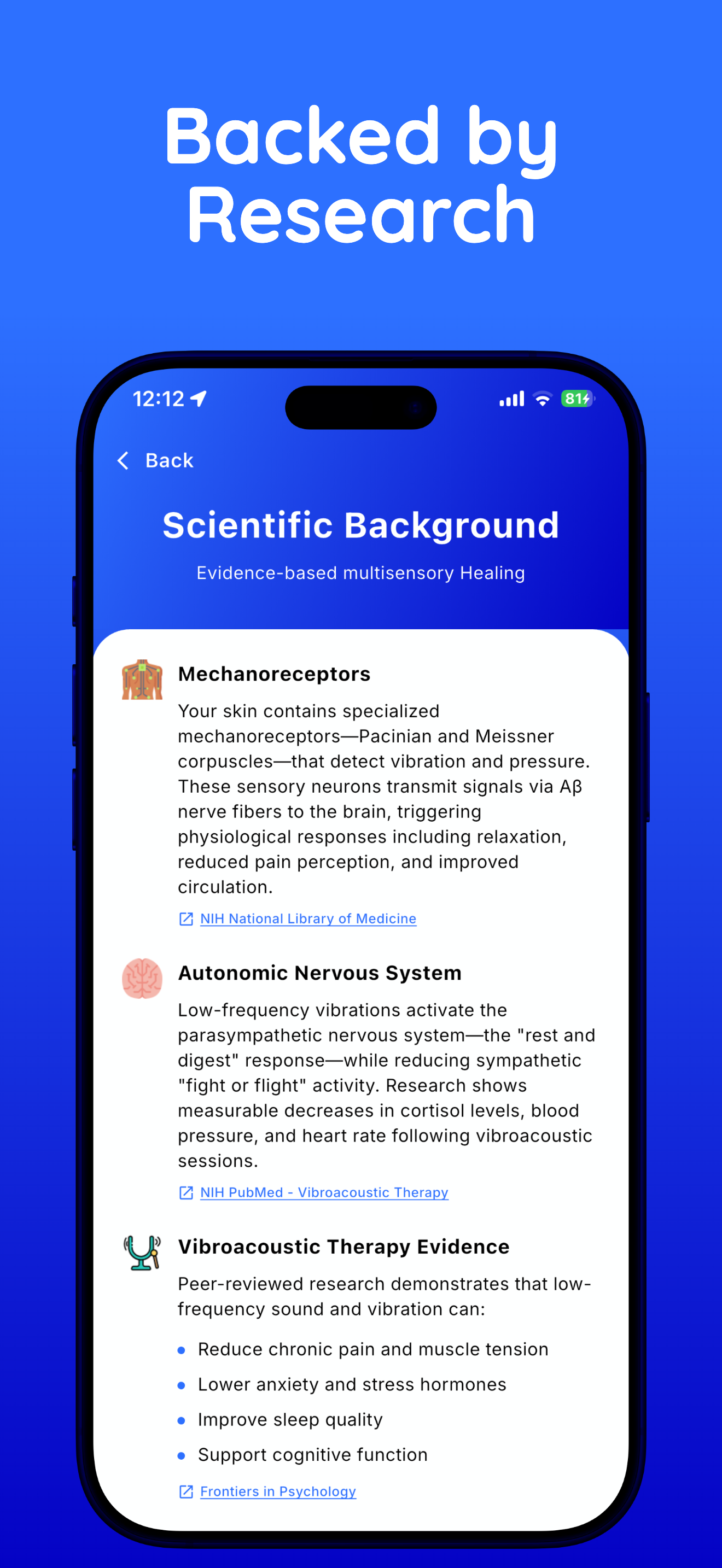
When we experience music, we're not just hearing it - we're feeling it. Sound waves create vibrations that can be physically perceived by the body, particularly at lower frequencies (typically 20-120 Hz).
Research has shown that these vibrations can:
- Activate mechanoreceptors in the skin and deeper tissues
- Influence autonomic nervous system regulation
- Support the body's natural relaxation response
- Enhance proprioceptive awareness
Multisensory Integration
One of the key benefits of vibroacoustic therapy is its multisensory nature. By combining:
- Auditory stimulation (what we hear)
- Tactile stimulation (what we feel)
The therapy creates a more immersive and potentially more effective therapeutic experience than sound alone.
Clinical Applications
Vibroacoustic therapy has been studied for various applications, including:
- Pain management
- Anxiety reduction
- Sleep quality improvement
- Post-viral recovery support
- Neurological rehabilitation
The Musica Medica Approach
At Musica Medica, we've designed our platform to make vibroacoustic therapy accessible and user-friendly. Our app combines:
- Carefully selected musical compositions
- Precisely calibrated vibration patterns
- Customizable session lengths and intensities
All designed to support your individual wellness needs.
Looking Forward
As research in this field continues to expand, we're excited to see new applications and deeper understanding of how music and vibration can support human health and well-being.
Interested in trying vibroacoustic therapy? Download the Musica Medica app and start your first session today.